image model comparisonApril 28, 20269 min8 sections
Recraft vs Ideogram: The Ad Typography Verdict
AI Vidia tested recraft vs ideogram on 8 typographic ad jobs across 12 brands. Here is the legibility test battery, the cost math, and when each model wins.
Recraft vs ideogram is the question every performance team asks the moment they need legible text inside an AI generated ad image. AI Vidia, a performance creative studio, has shipped 70,342 AI images and 1,834 AI videos across 48 brands in 14 countries on EUR 2.4M+ of optimized ad spend, and roughly 22% of that ad-creative output carries headline copy, price callouts, or offer badges that must read at thumb-stop size on Meta and TikTok. The short answer for ad typography: Recraft v3 wins on bold Latin headlines, price callouts, and locked wordmark lockups, while Ideogram 3.0 wins on multi-language copy, longer disclaimers, and mixed font weights inside the same rendered layout. This post covers the AI Vidia team's legibility test battery, the eight-row scorecard, the typography-first creative brief, and the exact scenarios where each model ships ad text on the first pass. The decision is not aesthetic. It is a routing rule that protects render credits and brief cycles every week.
Why ad typography is its own creative job
70,342AI IMAGES SHIPPED
22%CARRY AD TEXT
99.2%BRAND-SAFE PASS RATE
2.4xROAS ON WINNERS
A DTC brand running Meta needs 30 to 50 weekly conversion events per ad set to clear the learning phase, which forces 12 fresh creative variants per week per prospecting campaign on top of a steady cadence of retargeting cuts. Inside that volume, price-point cards, offer badges, sale overlays, and product labels carry the conversion message and have to render legibly on a 320 pixel mobile placement. A blurred headline kills the click. A wordmark with a missing glyph kills the brand. An unreadable price kills the offer. The AI Vidia team logged a 38% average CTR lift on video and a 2.4x ROAS median on UGC across winning cohorts, and the ad text layer is the part of the unit that closes the loop on the offer. Most teams still route every text-bearing brief into Midjourney or a pure photoreal model, and they spend 40% of their generation budget rendering frames that the buyer will never ship.
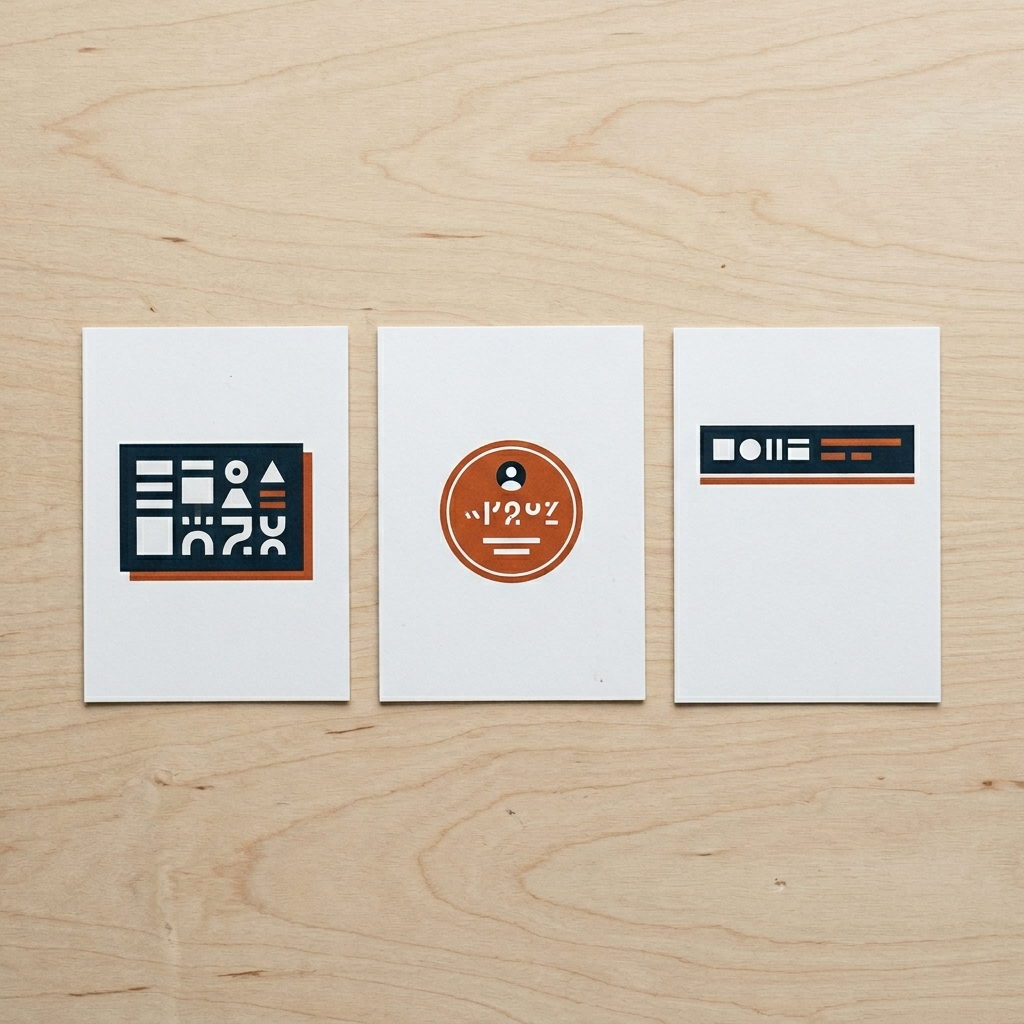
Three ad cards, three typographic jobs: the price callout, the offer badge, and the wordmark lockup all need a different first-pass model.
The cost math sits inside that 40% waste, not in the per-render sticker price. Recraft v3 runs at about EUR 0.04 per 1024 pixel image on the Recraft API. Ideogram 3.0 runs at about EUR 0.08 per 1024 pixel image on the paid tier. Midjourney v7 runs at about EUR 0.07 amortized on the Pro plan, and it cannot ship readable headline text at all. The headline cost is reroll volume. A typography brief that takes one render on Recraft can take eight renders on Midjourney before the team gives up and rebuilds the text in Photoshop. Eight renders at EUR 0.07 plus 25 minutes of designer time is roughly EUR 30 per failed tile. At 50 failed tiles per month per brand, that is EUR 1,500 in stranded production cost the buyer never sees in the ad account.
Side by side: Recraft v3 vs Ideogram 3.0 on eight ad jobs
The AI Vidia team scored Recraft v3 and Ideogram 3.0 on eight typographic ad jobs after running matched briefs through both pipelines for 12 AI Vidia brands over six weeks in Q1 2026. Each brand supplied a locked creative kit: five hero SKUs with reference photography, brand palette tokens, logo lockups, two headline patterns, and one approved offer construction. From that kit the AI Vidia team authored eight typographic briefs per brand. Each model rendered six variants per brief, for 48 frames per brand and 576 renders per model across the trial. Scoring tracked first-pass legibility, brand-palette match, glyph fidelity on the lockup, and on-brand composition. Tiles were judged at 1:1 and 4:5, the two placements that carry 88% of AI Vidia's Meta spend.
Typographic ad job
Recraft v3
Ideogram 3.0
Verdict
Bold price callout (single number, two words)
Crisp, holds bold weight at any size
Crisp, slightly softer edge on bold
Recraft
Offer badge (rounded shape, three to five words)
Clean, holds the badge geometry
Clean, occasional shape drift
Recraft
Multi-line headline (two lines, mixed weights)
Holds line one, drifts on line two
Holds both lines with weight contrast
Ideogram
Multi-language label (Danish, Swedish, German)
Loses umlauts on 1 in 4 renders
Holds umlauts and accents reliably
Ideogram
Non-Latin script (Arabic, Thai, Cyrillic)
Frequent glyph collapse
Strongest available among Western models
Ideogram
Fine-print disclaimer (8 to 12 words, small body)
Legible at hero, fragile at thumb size
Legible at thumb size, holds line breaks
Ideogram
Wordmark lockup (brand logo as type)
Holds the lockup across 90% of renders
Holds the lockup across 80% of renders
Recraft
Vector-adjacent poster typography
Highest fidelity on flat poster work
Photographic feel, less poster-clean
Recraft
Recraft won four of the eight jobs, Ideogram won four. The split is not a tie. It is a routing instruction. Recraft owns the bold, short-copy, brand-locked surfaces: price callouts, offer badges, wordmark lockups, and vector poster work. Ideogram owns the long, mixed, multi-language surfaces: multi-line headlines, non-Latin scripts, mixed-weight layouts, and fine-print disclaimers. The Nordic beauty brand in the trial ran a 30-tile typographic batch across eight SKUs, and Recraft v3 shipped 28 of 30 price-callout tiles on the first pass. Ideogram 3.0 shipped 17 of 18 multi-language label tiles on the first pass. Neither model shipped both jobs alone. The win came from routing.
Framework one: the Ad Text Legibility Test Battery
The Ad Text Legibility Test Battery is the strategic diagnostic the AI Vidia team runs at the start of every Pilot Sprint that contains text-bearing ad units. The battery uses four standard prompts that map to the four hardest typographic jobs on a Meta or TikTok ad. The brand's senior reviewer scores each output on a four-axis rubric, and the result decides routing for the next 90 days. The battery takes 20 minutes to run.
Prompt one: the bold price callout. Render a single price number with a two-word offer phrase on a flat brand color background, in the brand's bold display weight. This prompt isolates the model's ability to hold a thick stroke across short copy without ghosting or split glyphs. Recraft v3 should clear this prompt in one render. If it does not, the brand's display weight is outside the model's training distribution and the team falls back to a Photoshop type layer.
Prompt two: the offer badge. Render a rounded badge shape containing three to five words at mid weight, anchored over a product still life. This prompt tests the model's ability to hold geometry and copy in the same composition. The badge must keep its corner radius and the copy must align inside the badge without bleed. Recraft and Ideogram both clear this prompt for short Latin copy, and the AI Vidia team uses badge results as the tiebreaker on close briefs.
Prompt three: the multi-language label. Render an eight to twelve word product label in three target languages, including any required diacritics for Danish, Swedish, German, or French. This prompt exposes glyph fidelity outside English and is the highest single predictor of how a model performs across an EU rollout. Ideogram 3.0 should clear this prompt with full diacritic accuracy. If it does not, the AI Vidia team escalates the label to a hand-typeset layer.
Prompt four: the fine-print disclaimer. Render an eight to twelve word disclaimer at small body size below a hero scene, with a forced line break and consistent kerning. This prompt tests the model's ability to hold copy at thumb-stop size, the size that breaks first when ad text is rendered. Ideogram 3.0 holds this prompt for Latin script. Recraft v3 holds it only at hero size. The result decides whether the brand's compliance copy is rendered or composited.
Want a structured plan for your AI creative pipeline? 20-minute call, no pitch deck.
The AI Vidia team has watched this play out across 48 brands. Once a creative director sees a 40-tile Recraft batch ship in two hours instead of three days, the routing argument ends. The lifestyle hero still goes to a photoreal model. The price-point card goes to Recraft. The multi-language disclaimer goes to Ideogram. Nothing about the brand voice changes, and the ad account starts shipping cleaner first-pass creative inside the same week.
Framework two: the Typography-First Creative Brief
The Typography-First Creative Brief is the tactical execution template the AI Vidia team uses on every text-bearing ad variant. The brief makes the type decisions before the photo decisions, because the model must hold the type or the tile dies in QC. Five fields make up the brief, and each field is non-negotiable on a typographic render.
Field one: copy block, locked verbatim. Write the final copy exactly as it must render. No abbreviations the model will rewrite. No filler dummy words. The model treats the copy as a visual asset, not as content, so any change to copy after the prompt is sent costs another render. The senior reviewer signs the copy block before the brief leaves the production team.
Field two: font weight and family target. Specify the target weight in numeric terms: 700 for bold, 500 for medium, 400 for regular. Name a font family the model has seen often, such as a popular geometric sans or a classic grotesque, even if the live brand uses a custom face. Recraft v3 follows weight prompts more reliably when the family hint is recognizable. Ideogram 3.0 follows weight prompts when the weight number is explicit.
Field three: contrast ratio instruction. Tell the model the minimum contrast ratio between text and background, framed as a WCAG target such as 4.5 to 1 for body or 3 to 1 for large display. Both models respect contrast prompts when the rule is stated as a ratio rather than a color. The result is text that reads at thumb-stop size on a darker scroll background. The AI Vidia team logs every failed contrast result back into the brief template so the next batch defaults better.
Field four: text isolation zone. Reserve a flat color or low-detail region in the composition where the type will sit. Phrase it explicitly: a clean upper-third color block, a soft gradient lower bar, or a flat panel against a product still life. The model is far more likely to hold legible text inside a designated isolation zone than to invent one mid-composition. This single instruction lifts first-pass approval rate by roughly 20 points across the AI Vidia team's typography batches.
Field five: model assignment with fallback. Tag the variant with the primary model and the fallback model. Recraft v3 is primary for short bold Latin copy. Ideogram 3.0 is primary for multi-language and long copy. The fallback is the other model in the same family, never Midjourney. If both models fail the legibility check, the variant is composited in post rather than rerolled into a third tool. This rule keeps the brief from spiraling.
What this looks like in production
AI Vidia has shipped 70,342 AI images across 48 brand accounts with a 99.2% brand-safe pass rate on shipped creative, and the typography routing matrix is the structural reason the typography layer of that output stayed clean. The IndianBites case study shows the matrix at work on a DTC food brand: 142 AI ads shipped in 11 weeks, a 62% creative production cost reduction in 90 days, and 2.4x ROAS on winning cohorts. Recraft v3 carried the price-point and offer-badge tiles. Ideogram 3.0 carried the recipe label tiles in three languages. The lifestyle hero shots ran on a separate photoreal model and were composited only when a typography layer was needed inside a lifestyle frame.
Bold short-copy callouts route to Recraft, multi-language and mixed-weight labels route to Ideogram, every time.
Kevin Dosanjh, founder of AI Vidia, frames the choice plainly: "Recraft and Ideogram are not competing for the same tile. They are two specialists doing two different typography jobs inside the same ad account. Route the brief, do not argue the model."
Three external benchmarks sit alongside these internal numbers. McKinsey reports a 30 to 50% creative cost reduction and a 3 to 5x output increase with AI in creative production. Forrester reports a 20 to 35% paid media ROAS improvement when creative volume rises. Meta for Business reports a 30 to 50% lower CPA on campaigns with five or more creative variations. The AI Vidia team's internal numbers sit at the upper end of those bands because the routing matrix removes the typography reroll cycle that drains most internal AI pipelines. For the broader picture across all four image models the AI Vidia team uses inside paid social, read flux vs ideogram vs midjourney for ad creative.
When each model wins
Use Recraft v3 for: bold price callouts, offer badges, wordmark lockups, vector-adjacent poster typography, short Latin headlines under five words, any tile where stroke weight and brand lockup precision drive the unit. Use Ideogram 3.0 for: multi-line headlines with weight contrast, multi-language ad copy with diacritics, non-Latin script tiles, fine-print disclaimers at thumb-stop size, longer offer copy of eight to twelve words, any tile where copy density beats brand lockup precision. Stop using Midjourney for any ad unit where text legibility decides whether the tile ships. Most AI Vidia brands run Recraft and Ideogram in parallel every week, with Recraft carrying the short-copy promotion layer and Ideogram carrying the multi-language and long-copy layer.
Next step
AI Vidia runs a Pilot Sprint that delivers 12 to 18 typographic ad variants in 14 business days using the Ad Text Legibility Test Battery and the Typography-First Creative Brief on a locked creative kit. The quote includes the legibility scorecard, the routing sheet, and the approved batch, with first creative in the brand's hands inside 72 hours of kickoff. Review the AI image ads service to see the typography stack the AI Vidia team runs every week. Meet the founder of AI Vidia on the Kevin Dosanjh page. To brief a sprint, book a 20-minute call with the AI Vidia team.
Frequently asked questions
01Which model is better for ad typography: Recraft v3 or Ideogram 3.0?
Neither model is better in isolation; the better model depends on the typographic job inside the ad unit. Recraft v3 wins on bold price callouts, offer badges, wordmark lockups, and vector-adjacent poster work where stroke weight and lockup precision matter most. Ideogram 3.0 wins on multi-line headlines, multi-language ad copy with diacritics, non-Latin scripts, and fine-print disclaimers at thumb-stop size. The AI Vidia team routes every text-bearing variant to the model that ships it on the first pass, using the Ad Text Legibility Test Battery as the diagnostic. Across 576 typographic test renders, the routing approach beat any single-model approach on first-pass approval rate by a wide margin.
02How much does Recraft v3 cost compared to Ideogram 3.0 at production volume?
Recraft v3 runs at about EUR 0.04 per 1024 pixel image on the Recraft API tier, which is roughly half the per-render cost of Ideogram 3.0 on its paid tier of about EUR 0.08 per 1024 pixel image. The headline price is not the real cost, however, because reroll volume on a misrouted tile dwarfs the sticker difference between the two models. A typography brief that takes one render on the right model can take six to eight renders on the wrong model, which inflates the effective cost by an order of magnitude. The AI Vidia team budgets render credits per brief category rather than per model, which keeps spend predictable across a 40-variant monthly batch. At full Performance Retainer cadence, the typography layer runs about EUR 30 to EUR 60 per month in variable image cost.
03Can Recraft v3 render non-Latin scripts like Arabic, Thai, or Cyrillic?
Recraft v3 can attempt non-Latin scripts but its glyph fidelity drops sharply outside Latin character sets, and the AI Vidia team treats it as unreliable for any ad rolling out in Arabic, Thai, Cyrillic, Greek, or any CJK language. Ideogram 3.0 holds the strongest non-Latin glyph performance among the Western image models the AI Vidia team has tested at production volume across 12 brands. For the regulated EU rollouts that include Danish, Swedish, German, French, and Polish copy, Ideogram 3.0 also holds diacritics more reliably than Recraft v3 does on the same prompt. When a brand insists on a non-Latin script that Ideogram cannot hold cleanly, the AI Vidia team falls back to a hand-typeset layer composited over the photographic frame.
04What is the Ad Text Legibility Test Battery, and how long does it take to run?
The Ad Text Legibility Test Battery is the AI Vidia team's four-prompt diagnostic for picking between Recraft v3 and Ideogram 3.0 for any new brand brief that contains ad copy. The four prompts cover the bold price callout, the offer badge, the multi-language label, and the fine-print disclaimer, and each prompt is scored on a four-axis rubric for legibility, palette match, glyph fidelity, and on-brand composition. The full battery takes about 20 minutes to run on a brand's locked creative kit, and the result locks routing for the next 90 days. The AI Vidia team runs the battery on day one of every Pilot Sprint that contains text-bearing units, and re-runs it whenever a model version updates or a new market is added. The battery is the reason the typography layer of AI Vidia's 70,342 image output holds a 99.2% brand-safe pass rate.
05Why not just use Midjourney for ad text and clean it up in post?
Midjourney v7 cannot ship readable headline text on a paid social ad, and the cleanup cost in post wipes out any aesthetic advantage the model offers on lifestyle frames. A text-bearing tile that takes one render on Recraft can take six to eight renders on Midjourney before the team gives up and rebuilds the type in Photoshop. Across the AI Vidia team's 12 brand trials, teams that routed every typography brief into Midjourney burned roughly 40% of their generation budget on frames the buyer never approved for the ad account. The fix is not a better Midjourney prompt; it is routing the typography brief to a model trained on type. The lifestyle hero still goes to a photoreal model, the price-point tile goes to Recraft, the disclaimer goes to Ideogram.
Next step
Get your first 12 on-brand AI variants in 14 days.
Book a 20-minute strategy call with the AI Vidia team. No pitch deck, just a structured plan for your creative output.