Nano Banana vs Midjourney: The Ecommerce Product Shot Verdict
AI Vidia tested Nano Banana against Midjourney v7 across 6 DTC brands and 864 renders. Here is the batch-render evaluation, the cost math, and when each model wins.
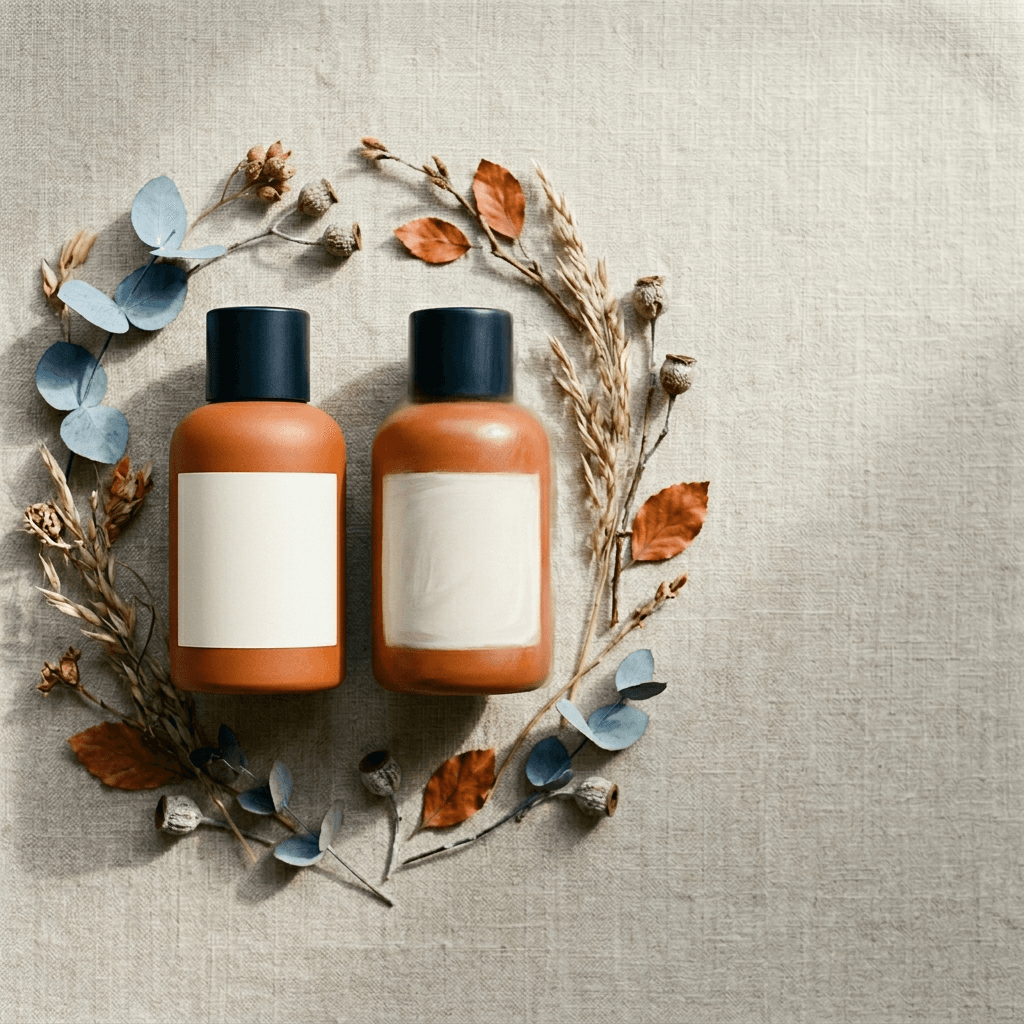
Nano banana vs midjourney is the comparison AI Vidia runs every time a brand asks whether to keep paying for a Midjourney seat or switch its product photography pipeline to Google's Nano Banana. AI Vidia, the performance creative arm of Admiral Media, has shipped 70,342 AI images across 48 brand accounts in 12 months. Each one of those runs through Nano Banana, Midjourney, Flux, Ideogram, Recraft, Seedream, or Imagen. The short answer for ecommerce product shots: Nano Banana wins on batch rendering and catalog consistency. Midjourney wins on concept exploration and editorial mood. This post covers the Admiral Media team's test protocol, the cost math, and the exact scenarios where each model ships on the first pass.
Why the model choice is a revenue lever
A DTC brand running Meta Ads needs 30 to 50 weekly conversion events per ad set to exit the learning phase. That floor translates into at least 12 fresh creative variants per week per prospecting campaign. Traditional product photography cannot keep up with that cadence without blowing the creative budget. AI Vidia logged a −62% creative production cost drop for IndianBites over 90 days, with a 2.4x ROAS on winning cohorts. The image model the Admiral Media team locks onto a brand's catalog is the single largest lever on that cost curve. Pick the wrong model and the brand ships soft, off-brand product shots. Ad spend then wastes itself on creative that never clears the testing queue.
The raw cost gap at an AI Vidia production volume is smaller than most marketing leads expect, but the consistency gap is larger. A Midjourney Pro plan at 60 USD per month caps at roughly 900 fast-GPU images. A Google API call on Nano Banana runs at about 0.039 USD per 1024x1024 image at time of writing. At 200 product shots per month, Midjourney works out to a flat 60 USD but with a seat constraint and drift across sessions. Nano Banana lands near 7.80 USD variable, plus orchestration, and holds catalog consistency across hundreds of renders. The cost delta is not the story. The story is how many weekly testing cycles the brand can run without the designer team burning out. Content Marketing Institute 2025 reports 73% of B2B marketing teams cite content volume as their biggest challenge.
Side by side: Nano Banana vs Midjourney v7 on ecommerce product shots
The Admiral Media team scored both models on eight dimensions after running the same 12-variant brief through each pipeline for six AI Vidia brands in Q1 2026. Each brand supplied a locked catalog of five to fifteen hero SKUs with reference photography, brand palette tokens, and a single approved background style. Each model rendered 144 images per brand, for 864 renders per model across the trial. Scoring tracked first-pass approval rate, on-brand pass rate, iteration count to ship, and drift incidents across the batch.
| Dimension | Nano Banana (Gemini 3 image) | Midjourney v7 | Verdict |
|---|---|---|---|
| Photorealism on product | Near-camera fidelity on textures, fabric, glass, food | Editorial, slight painterly cast on materials | Nano Banana |
| Catalog consistency across 20+ renders | High. Same lighting rig, palette, and plateware hold | Medium. Session-to-session drift is real | Nano Banana |
| Concept and mood exploration | Literal. Needs detailed prompting | Strong. Fewer words get further | Midjourney |
| Cost per 1024px image | About EUR 0.035 | About EUR 0.07 amortized | Nano Banana |
| Text rendering on label or packaging | Readable at 1024px, crisp at 2048 | Legible at hero, blurry at copy | Nano Banana |
| Speed per image, warm pool | 4 to 6 seconds | 40 to 60 seconds on fast mode | Nano Banana |
| Brand-lock ease from a single reference | High. Image conditioning holds | Medium. Style references drift | Nano Banana |
| Licensing for paid media | Commercial use permitted under Google terms | Commercial use permitted on Pro plan | Tie |
Nano Banana won six of eight dimensions on ecommerce product shots at volume. The largest swing is catalog consistency. When a Nordic beauty brand in the trial ran a 30-render batch across ten SKUs, Nano Banana held plateware, background, and lighting across 28 of 30 shots on the first pass. Midjourney v7 needed re-rolls on 11 of 30, almost all due to palette drift between sessions. Midjourney remains the Admiral Media team's first pick for hero concept work, editorial campaign imagery, and mood boards. When a brand scopes a new seasonal look, Midjourney ships the first three concepts faster than any other model. The split is clear. Nano Banana owns production. Midjourney owns discovery.
The Batch-Render Evaluation Protocol
The Admiral Media team runs this five-step protocol before locking a model onto a brand's catalog. The protocol removes opinion from the choice. The output is a scored matrix the buyer can sign off on inside 14 business days. Every AI Vidia Pilot Sprint includes this protocol.
- Lock the catalog. Pick the five to fifteen SKUs that carry the next 90 days of media spend. For each SKU, pull the existing hero photography, the brand palette tokens, and the single approved background style. Store these as the reference set every model renders against. The protocol does not run against hypothetical SKUs or stock imagery. Brand-lock inputs are the precondition, not a nice-to-have.
- Prompt-pair the test hero. Write one locked prompt per SKU that both models receive verbatim. Pair the prompt with a reference image and the brand's palette tokens. Neither prompt gets tuned per model during the trial. The goal is to measure the model, not the prompt engineer. Document every token so the result is reproducible.
- Run the 12-variant batch. Generate twelve renders per SKU per model. Log every seed. Render at 1024px for scoring and at 2048px for the approved variants. A single run on six SKUs produces 144 images per model. Expect two to three hours of orchestration time, not two to three days, so the brief-to-asset cadence holds.
- Score against brand standards. Score every image on four axes: photorealism, brand palette match, plateware and prop consistency, and text legibility. A senior AI Vidia reviewer signs the scorecard. The Admiral Media team aggregates scores per model and tracks first-pass approval rate, iteration-to-ship count, and drift incidents across the 144 renders. Scores above 4 out of 5 on all four axes pass the gate.
- Commit to the winning model for the catalog. The model that wins the protocol becomes the default renderer for that brand's catalog for the next 12 weeks. Do not mix models on catalog batches. Switching mid-batch is the fastest way to lose consistency, and AI Vidia has seen brand-safe pass rate drop from 99.2% to the low 80s when teams ignore this rule. Hero concept work keeps Midjourney in the stack. Catalog production locks to one engine.
What the numbers look like in production
AI Vidia has shipped 70,342 AI images across 48 brand accounts in 12 months, with a 99.2% brand-safe pass rate on shipped creative. Roughly 61% of that output runs on Nano Banana as of April 2026. Midjourney sits at 18%. Flux, Ideogram, Recraft, Seedream, and Imagen split the remainder. The IndianBites case study shows the batch-render protocol at work: 142 AI ads shipped in 11 weeks, a −62% creative production cost drop in 90 days, and 2.4x ROAS on winning cohorts. The protocol is the mechanism that made that result repeatable, not a single lucky render.
Three external benchmarks sit alongside these internal numbers. McKinsey reports a 30 to 50% creative cost reduction and a 3 to 5x output increase with AI in creative production. Deloitte reports 67% faster time to market for AI-enabled creative teams. Meta for Business reports a 30 to 50% lower CPA on campaigns with five or more creative variations. AI Vidia's internal numbers sit at the upper end of those bands. The Batch-Render Evaluation Protocol is the mechanical reason the upper end is reachable week after week, not a once-per-quarter spike.
One cost benchmark worth holding next to the model comparison. A traditional studio shoot for a DTC brand runs 3,000 to 6,000 EUR for ten SKUs, with a two to three week turnaround. An AI Vidia Performance Retainer ships 40 on-brand assets per month for about EUR 3,000 to EUR 5,000 per month, with first creative in the brand's hands inside 72 hours. The Nordic ecommerce case the Admiral Media team ran dropped cost per asset from 2,200 DKK to 320 DKK while lifting 90-day ROAS by 28%. Nano Banana carried the weight of that cost drop. Midjourney carried the quarterly concept work that fed the testing matrix.
When each model wins
Use Nano Banana for: product catalog batches, plateware and packaging renders that need legible text, any render that must match an existing hero shot, any brand with a locked style system, any campaign running more than 12 creative variants per week. Use Midjourney for: new seasonal concept exploration, editorial campaign imagery, mood boards, brand pitch decks, any render where a loose interpretation is acceptable. The hybrid path is the norm. Most AI Vidia brands run a Midjourney discovery week at the top of a quarter and then flip catalog production onto Nano Banana for the 12 weeks that follow.
A warning on the tools outside this two-way comparison. Flux Pro sits close to Nano Banana on photorealism but drifts on catalog consistency once the batch passes 50 images. Ideogram is strong on text rendering and weak on photorealism of non-flat products. Seedream 4 is fast and cheap but still inconsistent on plateware. Recraft holds up for vector-adjacent brand work and underperforms on photographic products. The Admiral Media team keeps all of them in rotation for specific jobs, but catalog batches lock to Nano Banana or Midjourney, not the long tail.
Next step
AI Vidia runs a Pilot Sprint that delivers 12 to 18 variants in 14 business days using the Batch-Render Evaluation Protocol on a locked catalog. The quote includes the protocol report, the scored matrix, and the approved batch. Review the AI product photography service and the AI image ads service to see the stack the Admiral Media team runs. To brief a sprint, book a 20-minute call with the Admiral Media team. For the production systems behind these volumes, read how AI Vidia shipped 1,834 AI videos in 12 months.
Frequently asked questions
- Is Nano Banana or Midjourney better for ecommerce product shots?
- Nano Banana is better for ecommerce product shots at batch volume. AI Vidia ran 864 renders across six DTC brands and Nano Banana won six of eight evaluation dimensions, including catalog consistency, text rendering, and speed. Midjourney v7 still wins for concept exploration and editorial mood. The Admiral Media team uses Midjourney for discovery and Nano Banana for catalog production inside the same quarter.
- How much does Nano Banana cost compared to Midjourney?
- Nano Banana costs about 0.039 USD per 1024x1024 image through the Google API. Midjourney Pro is a flat 60 USD per month capped at roughly 900 fast-GPU images, which amortizes to about 0.07 EUR per image. At 200 monthly product shots, Nano Banana runs near 7.80 USD variable plus orchestration, and Midjourney Pro runs at its flat fee with a seat constraint. The raw cost gap is small. The larger gap is in catalog consistency across sessions, where Nano Banana holds and Midjourney drifts.
- Can Nano Banana render legible text on product packaging?
- Yes. Nano Banana renders readable text on labels at 1024 pixels and crisp text at 2048 pixels when the prompt names the exact words and the reference image shows the label. AI Vidia scored Nano Banana above Midjourney v7 on text rendering in the Q1 2026 trial. For edge cases with dense typography, the Admiral Media team pairs Nano Banana with Ideogram on the text-critical variants and composites the final render.
- Does Midjourney still have a role in a DTC brand's creative pipeline?
- Yes. Midjourney remains the first choice for concept exploration, editorial campaign imagery, seasonal mood boards, and pitch decks. AI Vidia's own output still runs 18% on Midjourney, almost all of it hero and concept work. The Admiral Media team typically runs a Midjourney discovery week at the top of a quarter to define the seasonal look, then flips catalog production onto Nano Banana for the 12 weeks that follow. The hybrid stack outperforms a single-model stack on most DTC accounts.
- How many product shots can AI Vidia produce per month using Nano Banana?
- AI Vidia ships 40 on-brand assets per brand per month on the Performance Retainer, and 70 on-brand assets per month on the Brand System tier for multi-market brands. Nano Banana carries roughly 61% of that output today. The Admiral Media team has shipped 70,342 AI images across 48 brand accounts in the last 12 months with a 99.2% brand-safe pass rate. The ceiling is not the model. It is how fast the brand can brief, approve, and test.
- What is the Batch-Render Evaluation Protocol?
- The Batch-Render Evaluation Protocol is the five-step method AI Vidia uses to lock an image model to a brand's catalog. The five steps are lock the catalog, prompt-pair the test hero, run the 12-variant batch, score against brand standards, and commit to the winning model. The protocol runs in 14 business days and produces a scored matrix that becomes the default renderer for the next 12 weeks. The Admiral Media team includes this protocol inside every AI Vidia Pilot Sprint.
Next step
Get your first 12 on-brand AI variants in 14 days.
Book a 20-minute strategy call with the Admiral Media team.
Book a callRead next